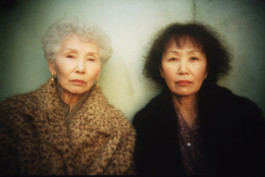
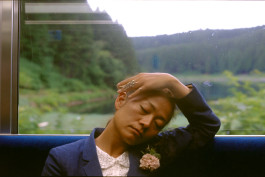
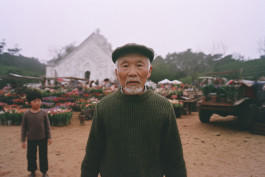
My film unfolds inside AI’s playground, where family memories and everyday scenes are rebuilt as a hybrid world of half-documented, half-invented characters. Camera and algorithm become a healing game, looping, glitching and remixing fragments of image and voice.
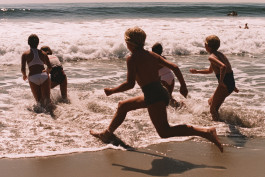
The film asks what is preserved, what is erased, and who is allowed to appear on screen. A childhood memory at the beach becomes a sun-bleached hallucination, with waves repeating like corrupted files and a parent drifting in and out of focus. A funeral procession loops endlessly, while love, heartbreak and domestic rituals repeatedly rewrite themselves.
In this space, grief behaves like a duplicated file, childhood like an unstable archive, and family history like a system attempting to restore what was lost. These memories are treated as living materials: they shift, stutter and reassemble, creating a visual language in which emotional truth survives even when factual reality collapses.